
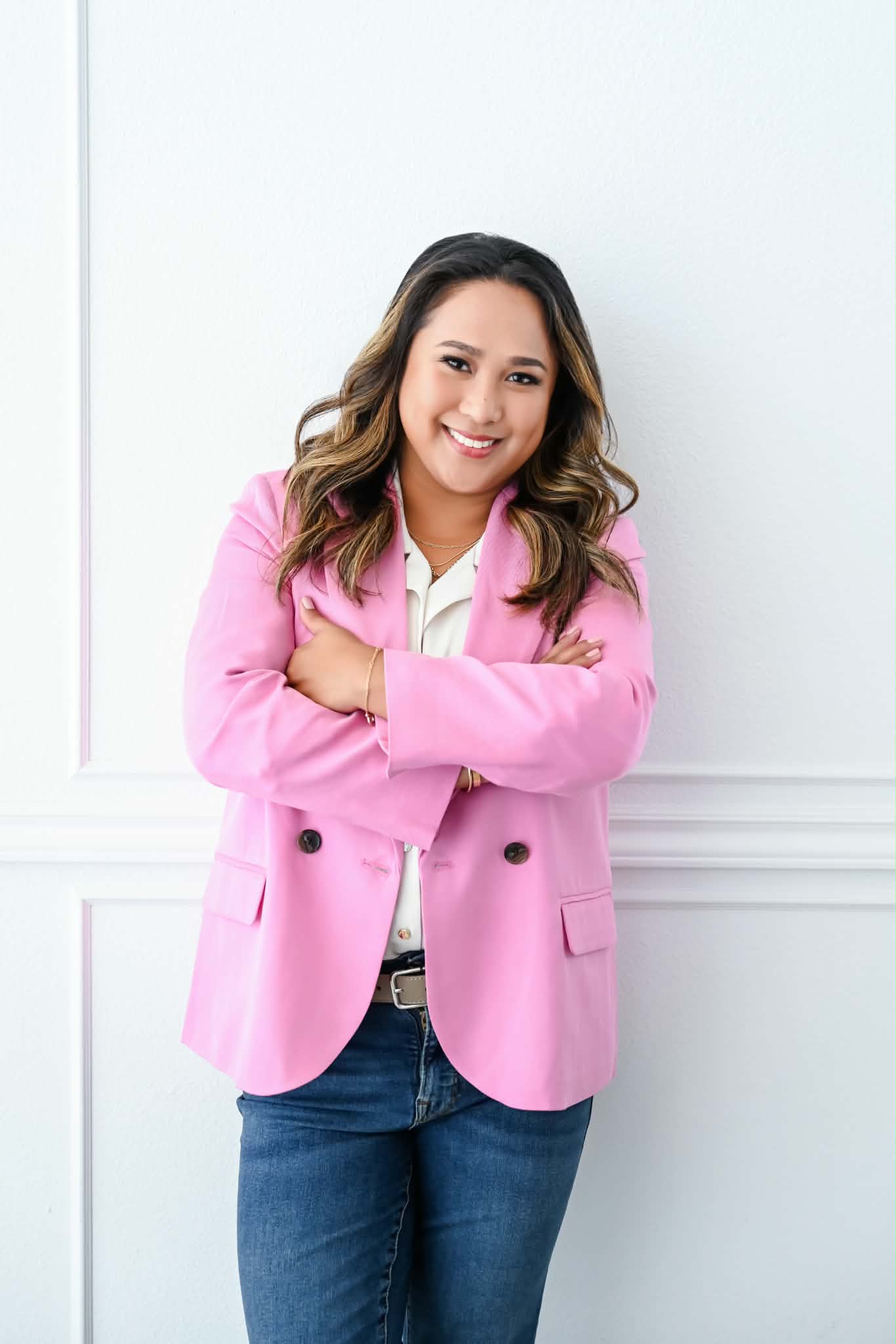
By Dr. Rena Camille Virtucio
I was 22 when I graduated from veterinary school in the Philippines, bright-eyed, ambitious, a little prideful, and probably carrying more angst than I knew what to do with.
I had recently lost my father, who had always been excited about helping me establish a veterinary clinic in our hometown. He would tell me about the microscope he wanted to buy, the equipment he was looking into, and the little hospital he imagined I would someday run. Unfortunately, he passed away before any of that could happen.
Losing him changed how I looked at my future. I knew I needed to work hard, not just for myself, but for my mother and brother. I wanted financial stability, independence, and the opportunity to experience a world beyond what I had grown up knowing.
Coming from a developing country, I understood that opportunities and resources weren’t always readily available, regardless of how hard someone worked. I wanted to practice medicine somewhere I could learn more, explore new technology, and have access to resources that weren’t always available back home.
I just didn’t know how to get there.
So I started working.
My first job was at Greenwoods Pet Hospital in Manila, where I was fortunate to have mentors who treated me like family. Dr. Geoff Carullo and Dr. Shine Fernandez-Chua helped shape the foundation of the veterinarian I would eventually become.
I stayed hours after my shifts, came in on days off, and volunteered during holidays simply because I wanted to learn. I remember someone once questioning why my boss would allow such a newly graduated veterinarian to handle a shift. He defended me, reminding them that I had graduated, passed my examinations, and earned my license.
That moment stayed with me. Someone believed in me while I was still learning to believe in myself. Years later, it would influence the kind of leader I wanted to become.
A Simple Life and a Bigger Dream
Life in Manila was simple, busy, and honestly, quite enjoyable.
I’ve always loved big cities, modern ideas, innovation, and discovering something new. I rented a humble apartment for about $100 a month, which was already a significant expense on a young veterinarian’s salary. I worked six days a week and wrote online pet articles on the side, earning a little extra money in dollars.
My life revolved around work, friends, occasional mall trips, visits home, and eventually my little Pomeranian, Andy, who remained part of my life for many years.
It wasn’t extraordinary, but I was happy.
Working in a small veterinary practice also taught me that medicine was much more complicated than textbooks suggested. You weren’t just the veterinarian. You collected samples, answered phones, handled payments, communicated with clients, and sometimes did practically everything in between.
Looking back, those experiences taught me the operational realities of veterinary medicine long before I ever became a business owner.
Still, I wanted to experience something different. It wasn’t that I disliked my life in the Philippines. I simply wanted to see what else was possible.
I dreamed of getting on a plane and starting an adventure somewhere far away, ideally in the United States. I knew it would require money, sponsorship, examinations, and sacrifices I could barely afford.
But I figured that if I kept working, learning, and putting myself out there, perhaps an opportunity would eventually come.
Finding My Way to America
My journey to becoming a veterinarian in the United States was never a straight line, and it certainly wasn’t something I accomplished alone.
While working in Manila, I saved whatever I could and made several trips to America with the help of family, friends, godparents, and people who generously opened their homes to me.
I would email veterinary hospitals near wherever I was staying, sometimes completely out of the blue, asking if I could shadow their veterinarians.
To my surprise, many welcomed me.
I observed veterinary medicine in Florida, Texas, and Maryland. Those experiences changed my perspective. I fell in love with the diagnostic capabilities, advanced testing, specialists, technology, and organized systems available in American veterinary medicine.
Everything I had always been drawn to was right in front of me.
But admiring those opportunities and actually becoming licensed to practice were two very different things.
I had to complete examinations and eventually undergo a year of clinical training alongside senior veterinary students in Missouri.
I remember the cold, the snow, the unfamiliar culture, secondhand books, and countless nights studying and wondering whether everything I had invested would ever pay off.
At one point, I nearly lost the opportunity because I couldn’t secure the personal loan I had expected to use for tuition. I was devastated and running out of options.
Eventually, I gathered the courage to ask a family member for help. One message was all it took. Within days, the financial support I needed arrived.
I still hold that moment close to my heart.
So many people along the way took a chance on me, offered guidance, shared their resources, or simply showed kindness when I needed it most.
I believe my journey was a combination of hard work, faith, timing, and tremendous good fortune.
It also taught me something important. Sometimes people are willing to give everything they have to pursue a dream, but what holds them back isn’t a lack of determination or ability. It’s a lack of access to resources, opportunities, and support.
I promised myself that if I ever reached a position where I could help someone overcome those barriers, I would.
Learning to Belong, and Finding My Voice
When I finally became licensed in the United States, I moved to California, hoping its diverse communities would make the transition easier.
But I quickly learned that becoming licensed and feeling confident as a veterinarian were two entirely different accomplishments.
The medicine itself wasn’t my biggest challenge. I was thrilled to have access to advanced diagnostics, specialists, and resources that allowed me to investigate cases more thoroughly.
What challenged me most was learning to communicate and establish credibility in a different culture.
I became more conscious of the words I used, how I introduced myself, how I expressed empathy, how I listened, and even how I carried myself in a room.
Different cultures have different expectations and ways of communicating. I had to learn how to be confident without being dismissive, respectful without losing my voice, and compassionate without assuming everyone shared my perspective.
Every pet owner comes with a different background, financial situation, priorities, and personal challenges.
My responsibility was to recommend what I believed was best for the patient, communicate clearly, prioritize the animal’s comfort, and respect the decisions families ultimately made.
To make things more interesting, I began practicing during the COVID-19 pandemic, when much of veterinary medicine happened over the phone or in parking lots.
There were moments when I reminded myself that this was exactly what I had spent years working toward. I had finally earned the opportunity, and now I needed to take care of it.
Over time, I found my own style of medicine, became more comfortable leading teams, and learned how to communicate expectations while maintaining kindness and respect.
I’m still learning those lessons today.
From House Calls to Business Ownership
Eventually, I discovered mobile veterinary medicine, and something about it felt deeply personal and fulfilling.
I loved its simplicity. I could slow down, spend more time with patients, understand their families, and practice medicine with greater attention to individual needs and comfort.
House calls allowed me to see pets in their own environments and build relationships that went beyond a typical hospital visit.
It was, for lack of a better description, soul-filling.
That experience eventually led me to establish Let’s MoVET, my own mobile veterinary practice in Los Angeles.
I never intended for it to become something enormous. I simply wanted a small, thoughtful practice where I could do good medicine, continue learning, and care for animals in a way that felt meaningful.
But starting a business in a country where I hadn’t grown up introduced an entirely different education.
Veterinary school certainly hadn’t prepared me for taxes, finances, human resources, managing employees, building systems, or the emotional complexities of running a business.
I made mistakes. I trusted people, learned from people, lost relationships, and developed new ones.
Friendships changed, professional boundaries became complicated, and I learned that being empathetic didn’t mean avoiding difficult decisions.
At times, I was probably too accommodating. Eventually, I understood that leadership requires both kindness and accountability.
I also had to learn to be more forgiving toward myself.
There will always be things I wish I had known sooner or handled differently. But being human means accepting that we can do our best and still fall short of our expectations.
What matters is having good intentions, acknowledging mistakes, and continuing to improve.
As Let’s MoVET grew, the logistics, manpower requirements, and constantly changing schedules made long-term stability increasingly difficult.
I was grateful for what I had built, but I began wondering whether a different direction might offer greater stability for myself, my team, and the people depending on us.
Cuddle Paws: A Dream I Never Planned
Cuddle Paws Veterinary was never a dream I had carefully planned from the beginning.
I didn’t graduate from veterinary school telling myself I needed to own a hospital by a certain age.
If anything, opening a physical practice came from the same desire that had guided much of my life: stability, purpose, and the opportunity to build something meaningful.
With encouragement from veterinarian friends, mentors, and people who believed in the idea, I began exploring what it would take to establish a hospital.
What emerged was a vision shaped by practically every experience I had collected throughout my career.
I wanted Cuddle Paws to be a place where pets felt comfortable, clients felt heard, and veterinary professionals felt supported.
A workplace where young doctors wouldn’t be thrown under the bus for still learning. Where employees could rely on clear systems and protocols. Where kindness and accountability could exist together.
I wanted thoughtful, transparent medicine without judgment, recognizing that pet owners already carry anxiety about their animals, medical decisions, and finances.
More than anything, I wanted the hospital to feel like a big hug when someone walked through the doors.
Of course, bringing that vision to life was far from easy.
Construction delays, permit issues, electrical problems, and financial pressures pushed me to a point where, just weeks before opening, I seriously considered giving up and flying home.
I was exhausted, frightened, and unsure how much longer I could sustain the project.
But one day, as I walked through the nearly finished hospital and saw the colors, fixtures, and spaces finally coming together, I felt as though the building itself was asking me for a chance.
I remember speaking to it, almost as if it could hear me.
If this place was meant to help animals, families, employees, and perhaps veterinarians searching for a better future, then I needed it to happen. And if it wasn’t meant to be, I needed to know.
Within 24 hours, we received approval for our remaining permits.
I don’t pretend that moment guaranteed success or meant everything would suddenly become easy.
But to me, it was a reminder to keep going.
Today, I’m proud of what Cuddle Paws has become, even knowing how much work remains. I’m also grateful to be building it at a time when technology, including artificial intelligence, can help small business owners navigate responsibilities that once felt overwhelming.
My greatest hope is that the hospital will eventually provide opportunities for other veterinarians, especially those who, like me, came from far away hoping to build a more secure future for themselves and their families.
So many people helped my stars align.
If I can help someone else’s stars align, that would mean more to me than the prestige of owning a hospital.
What I Would Tell My 22-Year-Old Self
If I could sit across from my 22-year-old self today, I would tell her to stick with it.
I would tell that bright-eyed, prideful, occasionally angst-filled young woman that she was built for the life ahead of her.
It wouldn’t necessarily get easier. But she already had much of what she needed: determination, values, strength, and people who would help her along the way.
I would remind her to trust her judgment, protect her principles, and never shortchange herself simply to make other people comfortable.
Kindness and empathy matter, but not at the expense of losing who you are.
You cannot continue helping others if you’ve completely exhausted or abandoned yourself in the process.
At 35, I also understand that success is far more subjective than I once believed.
What success meant to me at 22 is different from what it means today. I’m certain my 45- or 65-year-old self will define it differently again.
I no longer believe success must look like financial wealth, professional recognition, impressive titles, or millions of social media followers.
Sometimes success is simply showing up for your patients, helping a worried pet owner understand their options, supporting a colleague, or making someone’s difficult day a little easier.
It’s having purpose behind what you do and knowing you’ve given it your best.
It’s being humble enough to apologize when you’re wrong and strong enough to stand by your values when things become uncomfortable.
When I look back, I don’t see a perfectly executed plan.
I see a young veterinarian who wanted an opportunity, people who generously helped her along the way, lessons learned through mistakes and uncertainty, and a life that continued opening doors she never imagined.
My father once dreamed of helping me build a clinic.
Years later, I’ve built one in a country far from home, shaped by experiences and people I could never have predicted.
And perhaps the most fulfilling part isn’t that I finally have a hospital of my own.
It’s the possibility that something I built might someday become the opportunity someone else has been waiting for.
To me, that is success.
Not necessarily having everything, but finding purpose in what you have, giving what you can, and leaving people, animals, and the world around you a little better than you found them.